



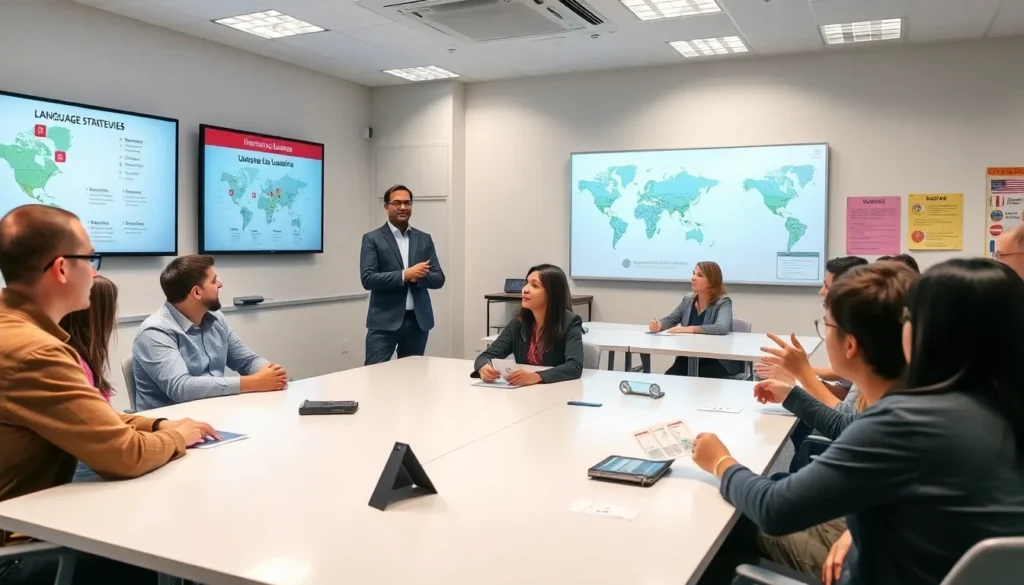
Imagine being able to chat effortlessly in a foreign language, ordering your coffee like a local, or impressing your friends with your newfound linguistic prowess. Sounds dreamy, right? Learning a new language doesn’t have to be an uphill battle filled with boring textbooks or tedious grammar rules. Instead, with the right techniques, it can be an engaging adventure. Buckle up as we jump into the world of language learning techniques, where effective learning meets a sprinkle of fun.
Importance of Language Learning Techniques

Language learning techniques are the backbone of mastering a new language. These methods not only help learners pick up vocabulary and grammar, but they also foster a deeper cultural understanding. When learners use effective techniques, the whole process becomes less about rote memorization and more about communication and connection. This makes language acquisition not just a task, but a joyful experience. Also, in our increasingly globalized world, knowing a second (or third) language can open doors to travel opportunities and career advancements. In essence, employing the right language learning techniques can enhance both the efficiency and enjoyment of the learning journey.
Different Types of Language Learning Techniques
When it comes to learning a new language, no one-size-fits-all technique exists. Different strokes work for different folks. Here are some effective methods that have proven successful:
Immersive Techniques for Language Acquisition
Imagine walking into a bustling café in Paris, ordering a croissant entirely in French while the barista chuckles cheerfully at your accent. Immersion techniques like this help learners get comfortable with real-life conversations. Watching movies, listening to music, or even reading books in the target language can accelerate understanding and retention. Being surrounded by the language creates an atmosphere where learners can absorb linguistic nuances effortlessly. Also, joining language exchanges can provide practical conversational experience paired with cultural insights.
Cognitive Approaches to Language Learning
Cognitive techniques take a more structured path. This involves engaging with grammar rules and vocabulary systematically. Flashcards, for instance, can work wonders in cementing vocabulary retention. Techniques like spaced repetition use algorithms that optimize review sessions based on retention. This method limits cramming, allowing learners to retain information longer by spacing out revisits to challenging words or phrases. Techniques tied to cognitive psychology, such as connecting new words to familiar images, also assist in quicker recall.
Social Interaction and Language Learning
Learning a language does not need to be a solitary try. In fact, social interactions often lead to the best learning experiences. Engaging with native speakers can provide an authentic context for practice. Whether through language meet-ups, conversation partners, or even social media groups, interaction fosters real conversational skills. There’s a unique power in making mistakes in front of others: it creates a supportive space for growth, unlike the judgment of an empty classroom. Plus, connecting with people from diverse backgrounds provides insights into cultural nuances that textbooks just can’t offer. So why not jump into a chat? Each conversation is a step closer to fluency.
Leveraging Technology in Language Learning
In the digital age, technology has transformed the language learning landscape. Apps like Duolingo or Babbel offer interactive platforms that make learning engaging and user-friendly. Even podcasts and YouTube channels featuring native speakers can be incredibly effective. Virtual reality (VR) technology is also making waves, allowing learners to practice in simulated environments mimicking real-life situations. Besides, social networks like Facebook or language-specific forums provide platforms for practice and community support. Essentially, technology serves as both a tutor and a bridge, connecting learners to resources and experts across the globe.
Creating a Personalized Language Learning Plan
Personalization is key in any educational journey. A well-structured language learning plan tailored to individual learning styles makes a big difference. First, assessing current proficiency levels can help define goals. Whether the aim is to achieve conversational fluency, pass exams, or understand literature, setting clear objectives keeps learners motivated. Combining various techniques discussed earlier, immersive experiences, cognitive strategies, and social interaction, will make the learning process comprehensive. Regularly revisiting and revising the learning plan also allows it to adapt to evolving goals or interests. A personalized approach not only ensures progress but also maintains enthusiasm.